Founding Vision and Royal Permission
Georg Carstensen secured King Christian VIII's approval in 1843 by arguing that amusement would keep citizens content and away from political agitation. The site occupied former rampart land outside the old city walls — cheap, central and visually open.
Carstensen drew on European pleasure-garden models from Vienna and Paris, but adapted them to Danish bourgeois taste: restrained ornament, emphasis on promenading, live music and illuminated evenings rather than rowdy fairground chaos.
Tivoli opened on 15 August 1843. The name references the Jardin de Tivoli in Paris, itself evoking the Italian hill town — a chain of cultural reference common in nineteenth-century garden design.
Architecture and Garden Layers
Nineteenth-century pavilions mix Orientalist fantasy with half-timbered Nordic romanticism. The Chinese Tower, Glass Hall and Nimb palace restaurant layer styles accumulated across decades of renovation rather than a single master plan.
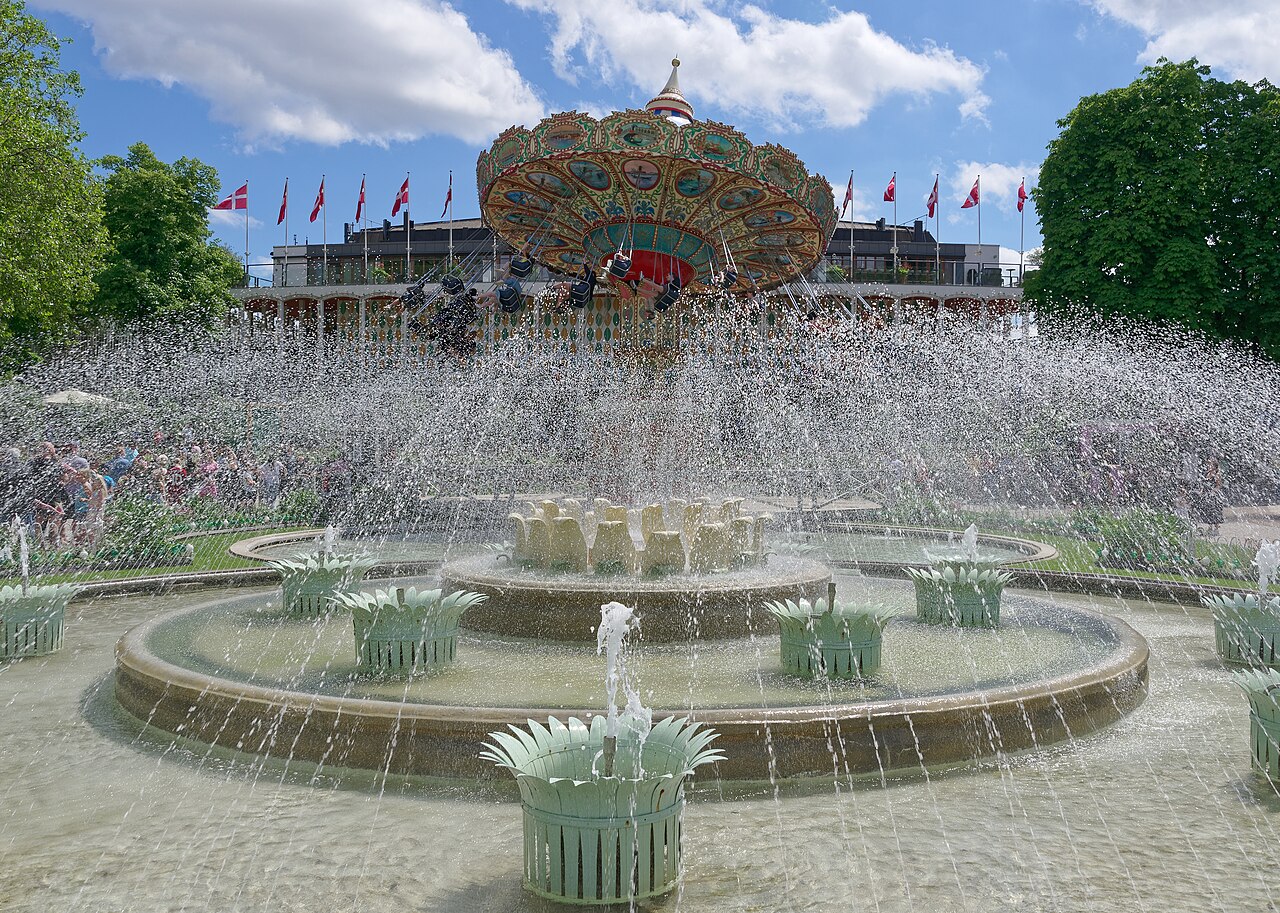
Landscape design prioritises seasonal flower rotation, mature chestnuts and intimate lawns scaled for families. Path geometry encourages slow circulation — a deliberate contrast to the grid of surrounding streets.
Theatre, Pantomime and Concert Traditions
The Pantomimeteatret, with its peacock-curtain machinery, anchors live performance. Harlequin pantomime arrived early and still shapes Christmas programming. Open-air stages host rock concerts that briefly transform the gardens into a pop venue without permanent structural change.
Tivoli's house orchestra tradition fed broader Danish musical education; many Copenhagen musicians first encountered symphonic repertoire here before concert halls expanded public access.
Surviving Conflict and Modernisation
German occupation damaged structures but did not end operations. Post-war rebuilding introduced modernist kiosks alongside restored historic façades — a negotiation between heritage display and contemporary leisure economics.
Rides, Technology and Cultural Status
The wooden roller coaster Rutschebanen (1914) remains a working heritage ride, illustrating how Tivoli curates nostalgia while adding steel coasters and virtual-reality attractions. Ride selection is editorial: each addition must read as part of the garden ensemble.
UNESCO does not list Tivoli, yet the gardens function as intangible heritage infrastructure — referenced in Danish literature, film and civic pride. City planners treat the site as a cultural anchor when redesigning surrounding transport hubs.
Read more: Scandinavian pleasure gardens and their shared design logic
Ownership and Civic Role Today
Tivoli A/S operates as a listed company, yet behaves like a civic institution during national celebrations. Season passes, corporate events and tourism revenue fund conservation of buildings that might otherwise lack commercial justification.
- Founded 1843 on former defence ramparts
- Pantomime theatre with historic peacock curtain
- Heritage wooden coaster Rutschebanen still operating
- Seasonal reopening rituals mark Copenhagen's cultural calendar